WebsitesJuly 2026
Top 10 Trust Signals Every Business Website Needs to Turn Visitors Into Customers
Enquiries stay low when visitors don't trust you yet. These ten signals remove uncertainty and turn visitors into customers.
You’ve invested in a professional website. The design looks modern, the copy is well written and your services are clearly presented. People are visiting your website every day, but enquiries remain low. Sound familiar?
The problem may not be your traffic.
It may be trust.
Every visitor makes a decision within seconds. They aren’t only asking whether they like your website. They’re asking whether they trust your business enough to spend their money with you.
Trust isn’t built through clever marketing or beautiful animations. It’s built through evidence. Customers want reassurance that your business is legitimate, experienced and capable of delivering what it promises.
This is why the highest-converting websites don’t simply look good. They remove uncertainty.
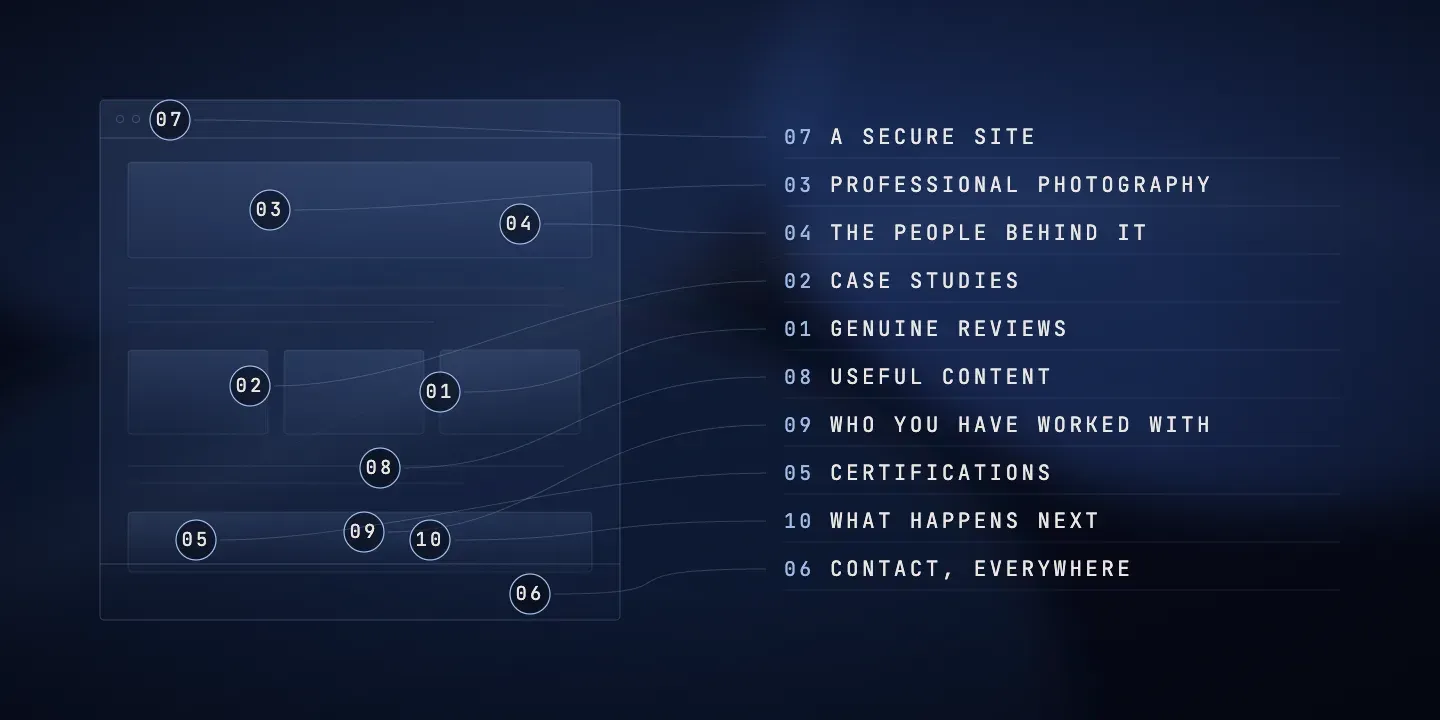
Here are ten trust signals every business should have.
1. Genuine Customer Reviews
Nothing influences purchasing decisions more than the opinion of existing customers.
When visitors see authentic reviews from real people, uncertainty immediately begins to disappear. Reviews demonstrate that other businesses or individuals have already trusted you and achieved positive results.
The most effective reviews don’t simply say, “Great service.”
They explain the problem the customer had, how your business solved it and what the final outcome was.
Whenever possible, include the customer’s name, company and photograph. Anonymous testimonials rarely carry the same credibility.
Google Reviews, Trustpilot and Facebook Reviews are all valuable because they are difficult to manipulate and easy for potential customers to verify.
2. Case Studies That Show Real Results
Many businesses tell visitors they’re experts.
Very few prove it.
Case studies allow potential customers to see how you approach real business challenges. Instead of listing services, explain the client’s objective, the strategy you developed, the work completed and the measurable results achieved.
If confidentiality prevents you from sharing exact figures, describe the improvements in practical terms. Explain how workflows became more efficient, sales processes improved or customer engagement increased.
People don’t buy services.
They buy outcomes.
3. Professional Photography
First impressions matter.
Visitors can immediately recognise the difference between authentic photography and generic stock images.
Professional photographs of your team, office, products, projects or completed work make your business feel genuine. They reassure customers that there are real people behind the brand.
Stock photography often creates the opposite effect. Instead of building confidence, it makes businesses appear anonymous and interchangeable.
Investing in professional photography is one of the simplest ways to increase credibility across your entire website.
4. Show the People Behind the Business
People trust people.
Many company websites spend pages describing their services while saying almost nothing about the individuals delivering them.
Introduce your leadership team. Share your experience. Explain why the business exists and what motivates your work.
You don’t need lengthy biographies.
A professional photograph, a concise introduction and relevant expertise are often enough to help visitors feel more comfortable reaching out.
This is particularly important for businesses that sell high value services where relationships play a significant role in the buying decision.
5. Display Recognised Certifications and Partnerships
Independent recognition builds confidence.
If your business holds professional certifications, industry memberships, official partnerships or recognised accreditations, display them clearly throughout your website.
Examples include Google Partner status, Microsoft Partner programmes, ISO certifications, Meta Business Partners, professional associations or industry awards.
These achievements demonstrate that your business meets recognised standards and has earned external validation.
Just ensure that every certification displayed is current and genuinely applicable.
6. Make It Easy to Contact You
A surprising number of business websites make it difficult for potential customers to get in touch.
Visitors shouldn’t need to search for a phone number, email address or contact form.
Your contact information should be visible throughout the website. Include multiple ways for customers to reach you, such as telephone, email, WhatsApp, contact forms and, where appropriate, your business address.
Businesses that appear accessible naturally feel more trustworthy than those that hide behind anonymous forms.
Transparency encourages confidence.
7. Build a Secure Website
Website security isn’t just a technical requirement.
It’s a trust signal.
Visitors notice secure connections, particularly when submitting personal information or making online payments. A properly configured SSL certificate, secure payment gateways and clear privacy policies reassure customers that their information will be handled responsibly.
Equally important is keeping your website maintained. Broken pages, outdated plugins and technical errors quickly undermine credibility, even if visitors don’t fully understand the underlying issues.
A secure website tells customers that your business pays attention to detail.
8. Demonstrate Expertise Through Useful Content
Trust grows when businesses educate rather than simply sell.
Publishing well researched articles, practical guides, industry insights and educational resources demonstrates expertise far more effectively than advertising claims.
When potential customers repeatedly find useful information on your website, they begin to associate your business with authority.
This is one of the reasons content marketing continues to deliver long term value. Every high quality article answers questions before customers even contact your business.
The goal isn’t simply attracting traffic.
It’s becoming the company people trust before they become customers.
9. Show Who You’ve Worked With
If respected businesses have trusted your company, don’t keep it a secret.
Displaying client logos, portfolio projects or notable collaborations provides immediate social proof. Visitors naturally assume that if established organisations chose your business, there must be a good reason.
This doesn’t mean exaggerating relationships or displaying logos without permission.
Only showcase genuine partnerships and completed work.
Authenticity always builds more trust than impressive looking graphics.
10. Explain Exactly What Happens Next
One of the biggest reasons visitors leave websites without making contact is uncertainty.
They don’t know what will happen after submitting the enquiry.
Will someone call them?
How long will it take?
Is there an obligation?
Will they receive a quotation?
Removing uncertainty significantly increases conversions.
Clearly explain your process. Let visitors know what they can expect, how quickly you respond and what the next step will be.
People are far more likely to take action when they understand what comes next.
Trust Is Built Long Before the First Conversation
Businesses often focus heavily on attracting more visitors while paying very little attention to what those visitors experience after arriving on the website.
Trust isn’t created by one impressive feature.
It’s created through dozens of small details working together.
Professional photography.
Real customer reviews.
Case studies.
Clear contact information.
Educational content.
Recognised certifications.
Transparent processes.
Each trust signal reduces uncertainty. Together, they create confidence.
Visitors don’t become customers because your website looks expensive.
They become customers because your website makes them feel confident that choosing your business is the right decision.
How DIGI MANTA Builds Websites That Inspire Confidence
At DIGI MANTA, we believe a website should do far more than look impressive. It should actively support your sales process by answering questions, building credibility and guiding visitors towards taking action.
When we design websites, we don’t simply focus on colours, layouts and animations. We identify the trust signals your customers expect to see, strengthen your brand’s credibility and create digital experiences that help visitors feel confident from the moment they land on your website.
Because great design attracts attention.
Trust converts visitors into customers.
At DIGI MANTA, we combine Brand Strategy, UX Design, Website Development and Business Development to create websites that don’t just generate traffic. They build confidence, strengthen your reputation and help turn more visitors into long term clients.